
What a Positive ANA Test Result Actually Means
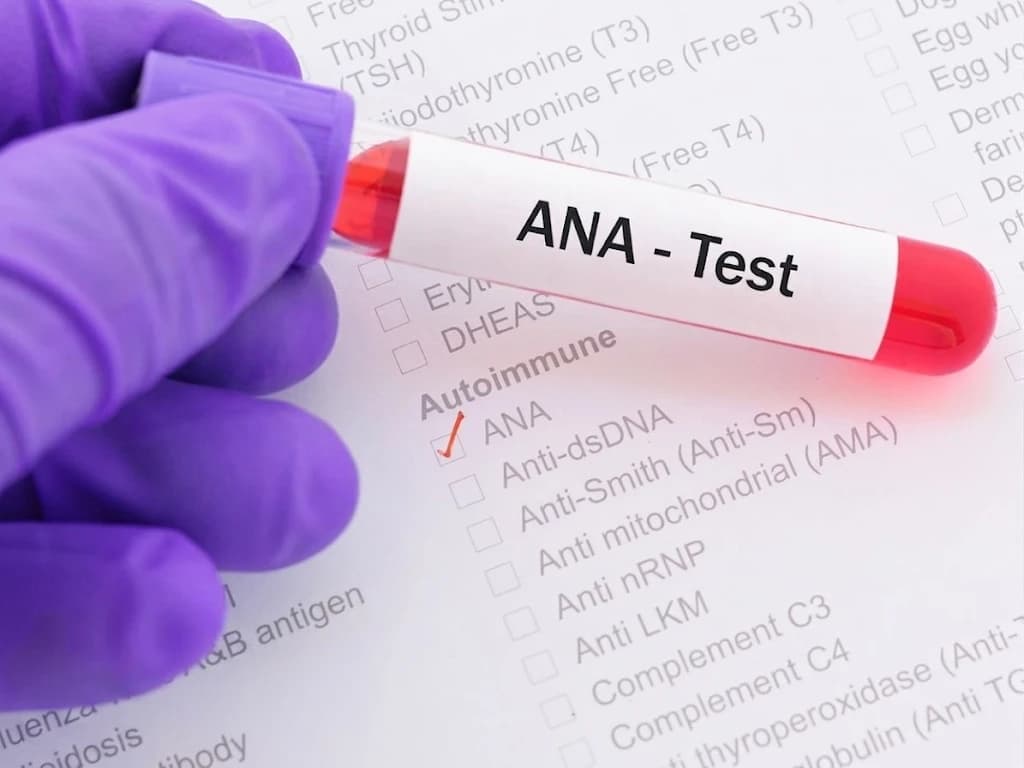
Few lab results cause as much immediate anxiety as a positive ANA (Antinuclear Antibody) test. Patients often open their online portal, see "Positive," run a quick web search, and immediately jump to alarming conclusions, most commonly assuming they have Systemic Lupus Erythematosus (SLE) or another severe autoimmune disease.
In reality, a positive ANA test is far more nuanced. Understanding what this screening tool actually measures, and what it doesn't, can help ease anxiety while guiding appropriate medical next steps.
1. What is an ANA test, really?
An antinuclear antibody (ANA) test measures autoantibodies in your blood that are directed against the nucleus of your own body's cells.
- A general screening tool. Think of an ANA test like a high-sensitivity smoke detector. It can signal that something might be going on in the immune system, but it cannot tell you where the fire is, or if it's just burnt toast.
- Sensitivity vs. specificity. The test is highly sensitive (meaning it rarely misses systemic lupus), but it is not specific. A positive result simply indicates immune activity; it does not automatically mean an autoimmune disease is present.
2. Why a positive ANA does not equal lupus
A positive ANA result is quite common in the general population, often occurring in completely healthy individuals who never develop an autoimmune condition:
- Low titer positives. ANA results are measured as titers (e.g., 1:40, 1:80, 1:160, 1:320+). Low titers (such as 1:40 or 1:80) are very common in healthy individuals, older adults, or people with a family history of autoimmunity.
- Non-autoimmune causes. ANA levels can temporarily rise due to common viral or bacterial infections, certain prescription medications, thyroid conditions, or general systemic stress.
- Healthy immune variations. Up to 15–20% of the healthy population has a positive ANA result without any associated illness or symptoms.
3. How physicians interpret the full picture
A positive ANA is never used in isolation to diagnose a condition. Diagnosis relies on combining lab findings with specific clinical signs:
- Titer and pattern. High titers (e.g., 1:320 or 1:640) and specific staining patterns (homogenous, speckled, nucleolar, centromere) provide helpful clues about which immune pathways are involved.
- Reflex testing (specific antibodies). If an ANA is positive, follow-up panel testing checks for specific antibodies (such as anti-dsDNA, Anti-Smith, Anti-SSA/SSB, Anti-RNP, or Anti-Scl-70) that align with specific autoimmune conditions like lupus, Sjögren's, dermatomyositis, or systemic sclerosis.
- Clinical symptoms. Symptoms carry the most weight. Doctors evaluate specific signs like classic cutaneous rashes (such as a malar rash or photosensitive lesions), joint swelling or arthritis, Raynaud's phenomenon, hair loss, or unexplained organ involvement.
Key rule: a positive test without corresponding symptoms, physical findings, or specific follow-up antibody markers does not make a diagnosis.
4. Practical steps if you have a positive ANA result
- Don't panic. Remember that a positive screening result is simply a starting point for investigation, not a definitive diagnosis.
- Document your symptoms. Keep a record of any physical changes, such as unexplained rashes, joint swelling, prolonged morning stiffness, fever, or extreme fatigue.
- Discuss follow-up testing. Talk with your primary care provider or specialist about whether secondary antibody panels or inflammatory markers (ESR, CRP, complement levels) are needed.
- Consider a rheumatology consultation. A rheumatologist can evaluate your overall health picture, interpret complex antibody panels, and provide clarity.
Understanding rheumatologic-dermatologic health requires looking at the whole person, not just a single laboratory value. If you or someone you know has received a positive ANA test, reaching out to your doctor for a complete clinical evaluation is the best way to get clear, personalized answers.
This post is for general educational purposes and is not a substitute for individual medical advice.